
The Quiet Strength: on the beauty and the exhaustion of caregiving
We call them the invisible heroes of society. But ask anyone who spends their days caring for a chronically ill partner, an aging parent, or a child with a disability, and they'll tell you: it rarely feels heroic.
What it actually feels like, most days, is exhaustion. A sense of being pulled in too many directions. And — if we're being honest — the quiet ache of being overlooked.
As a health blogger, I come across all kinds of trends. Ice baths, elaborate supplement stacks, and the latest biohacking craze. But the single most important foundation of public health has nothing to do with technology or products. It comes down to the caregiver. In the Netherlands, more than five million people provide unpaid support to someone they love. That's nearly a third of the entire population, showing up every single day to patch the gaps our healthcare system leaves behind.
Caregiving rarely starts with a plan. It grows out of love, out of instinct, out of the simple and unspoken feeling that, of course, you'll be there for someone who's struggling. It begins with "Sure, I'll come with you to that appointment" or "I'll grab your groceries, it's no trouble." Small things. Natural things.
And then, without quite noticing when it happened, the role has taken root. You're no longer just a partner, a daughter, a friend. You're also a nurse, a driver, a secretary, a shoulder to cry on. Nobody warned you. Nobody could have. The shift in a relationship — from partnership to dependency — can be quietly devastating in ways that are hard to even name.
There's something researchers call "ambiguous loss." The future you'd imagined together starts to dissolve, slowly, while the person you love is still right there beside you. They haven't left. And yet something has. How do you grieve something you haven't lost yet?
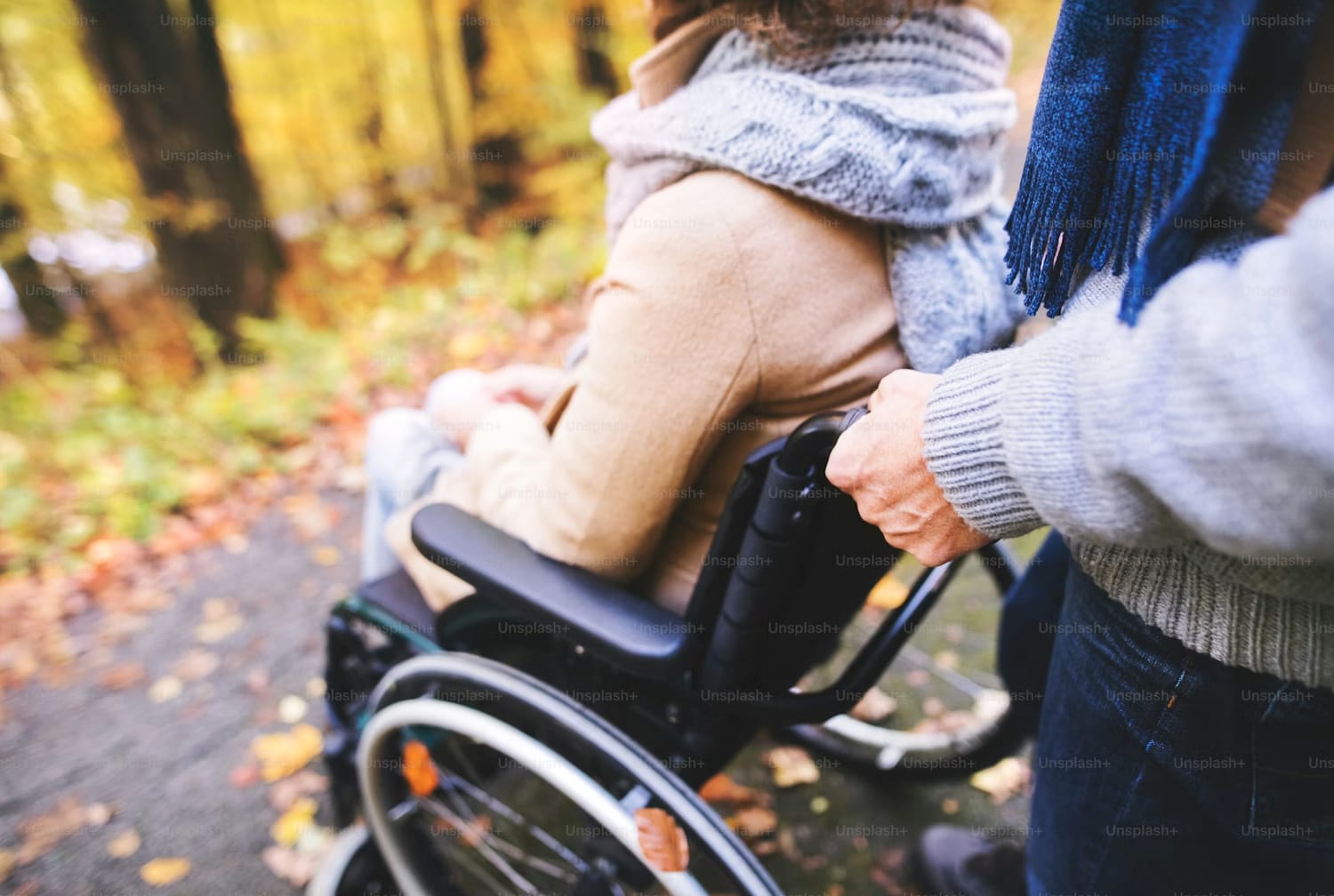
The toll this takes is rarely visible. But it's real, and it runs deep.
Chronic stress works like a slow leak — it doesn't announce itself, it just quietly wears you down. As a caregiver, you're always on. Always listening for the sound of a fall, bracing for the confused phone call at midnight, scanning for signs that something has shifted. Your nervous system never fully stands down. And over time, that constant state of readiness floods your body with cortisol, which disrupts your sleep, chips away at your immune system, and leaves you mentally hollowed out in ways that are hard to explain to someone who hasn't lived it.
And while all of this is happening inside you, the world outside seems to quietly shrink.
Friends stop inviting you as often. Maybe they assume you can't make it. Or maybe you've gone a few times and just didn't have the energy to keep up the performance — to laugh at the right moments, to seem present, to be fun — and somewhere along the way it felt easier to stay home.
Either way, you drift. And that loneliness doesn't make any of it easier.
And then there's the paperwork.
As if the caregiving itself weren't enough, you're also expected to find your way through a maze of bureaucracy, insurance companies, appeal processes, and forms that seem to multiply every time you think you've caught up. For many caregivers, navigating that system feels like a second full-time job stacked on top of the first.
And somewhere in the middle of all that, people lose themselves. A stubborn guilt creeps in and sets up camp. Can I really sit on a sunny terrace enjoying a coffee while she's upstairs in bed? That guilt feels protective somehow, like a form of loyalty. But it's not. It quietly convinces you to ignore your own limits, until one day your body or your mind simply gives out.
There's a reason they tell you to put your own oxygen mask on first on the plane. You can't keep giving from an empty cup — that much is true. And in the context of caregiving, taking care of yourself isn't a luxury or something to feel guilty about. It's what makes it possible to keep going at all.
That means daring to ask for help. Respite care, for instance, where a volunteer or professional steps in for a while so you can actually step out. It means finding small pockets of quiet in your day — even just one conscious breath while the kettle boils, enough to nudge your nervous system out of survival mode for a moment.
But does any of that feel easy when the guilt is still sitting there at the table with you?
The people around a caregiver have a role to play, too. But here's the thing: don't ask "Can I do anything to help?" Because of a sense of not wanting to be a burden, the answer will almost always be no.
Just show up instead. Leave a pot of soup at the door. Pick up the groceries without being asked. Tell them you're coming over Saturday afternoon for three hours so they can get outside, get some air, and remember what it feels like to walk somewhere without a phone in their hand waiting to ring. That kind of practical, unsolicited kindness lands differently than any well-meaning offer. For an exhausted soul, being seen without having to ask for it — that's everything.
And yet, for all its weight, caregiving can also be a source of something profound. Many people describe a kind of fulfillment they've never found anywhere else. The connection that forms in the middle of illness and vulnerability — it's raw, it's unvarnished, and it's real in a way that ordinary life rarely is. You find out what actually matters. Small things start to carry real weight: a smile on a hard day, a conversation that flows easily, one quiet afternoon where everything feels, briefly, okay.
Maybe that's the strange paradox at the heart of all this. That the hardest thing you've ever done might also be, in some way you didn't expect, one of the most meaningful. Whether that makes it easier — or whether it's even fair to say so — is something only the person living it can answer.
Caregiving is a marathon, not a sprint. It asks for a kind of endurance most of us never knew we had. But even the strongest runner needs looking after along the way.
If you're the one carrying this, you are seen. What you do matters more than most people around you will ever fully understand, and the dedication you bring to it is genuinely something to admire. But you're also just a person. A human being with limits, with needs, with a life that deserves tending to.
So today, maybe just be a little gentler with yourself than you were yesterday. The care you give so freely to others? You need it just as much. Do you allow yourself to receive it?
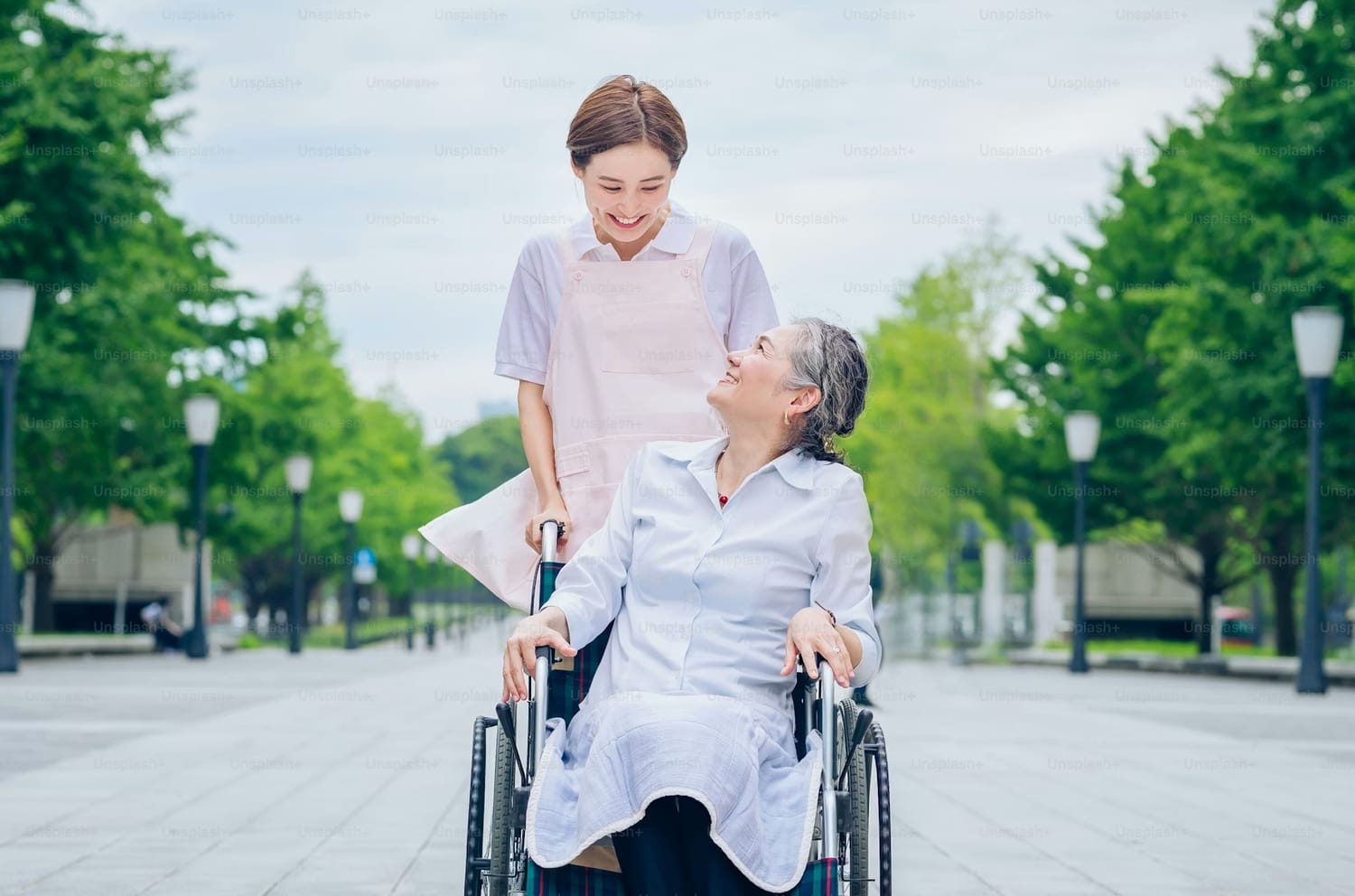
Some marathons are harder than others.
When the diagnosis is dementia or cancer, the road changes entirely. It stops being just a matter of endurance and becomes more like navigating a minefield, one careful step at a time, never quite sure what the next stretch will bring.
But the two are so different from each other. With dementia, you lose someone gradually, in pieces, while they're still right there in front of you. The person you love is physically present, but moments of real connection become rarer and more fleeting. You grieve someone who hasn't gone anywhere. With cancer, it's almost the opposite: the connection can be painfully, achingly alive, but now there's a timeline. A clock you can't stop thinking about, even when you're trying your hardest not to look at it.
How do you carry either of those things? And is there even a way to prepare?
The Dark Side of Love: Caring Through Dementia and Cancer
In caregiving, there are two paths that run side by side, each with its own particular shape of exhaustion. When we talk about caring for someone with dementia or cancer, we're not talking about temporary support. We're talking about a fundamental shift in reality.
As a health blogger, what I keep noticing is that these two diagnoses tend to push caregivers into an isolation that goes well beyond physical depletion. It reaches something deeper. Something that touches the core of who you are. Because you're not just the partner or the child anymore. You're the keeper of a fading past, or the guide through a bewildering medical landscape. And nobody gave you a map.
Caring for someone with dementia may be one of the loneliest forms of closeness that exists. It's a gradual goodbye, but not a clean one. Fragmented. The person who once steadied you, comforted you, knew you — you watch them become a mirror that reflects less and less of what you remember. And the hardest part isn't the practicalities. It's the psychological uncertainty of loving someone who is still there, and yet increasingly unreachable.
What it asks of you is almost inhuman. The repetition. The shifting moods. The moments of aggression or blank indifference that arrive without warning. You become the sole guardian of everything you shared together — every memory, every story, every version of who they used to be. That's an immense weight to carry alone.
And then there's the constant mental recalibration of stepping into a reality that isn't yours, of gently redirecting rather than correcting, of holding two truths at once. The person in front of you, and the person they were. After a while, that kind of sustained cognitive and emotional strain starts to feel like nothing else. Like a pressure with no real name.
Does anyone ever really understand what that costs you, unless they've been there themselves?
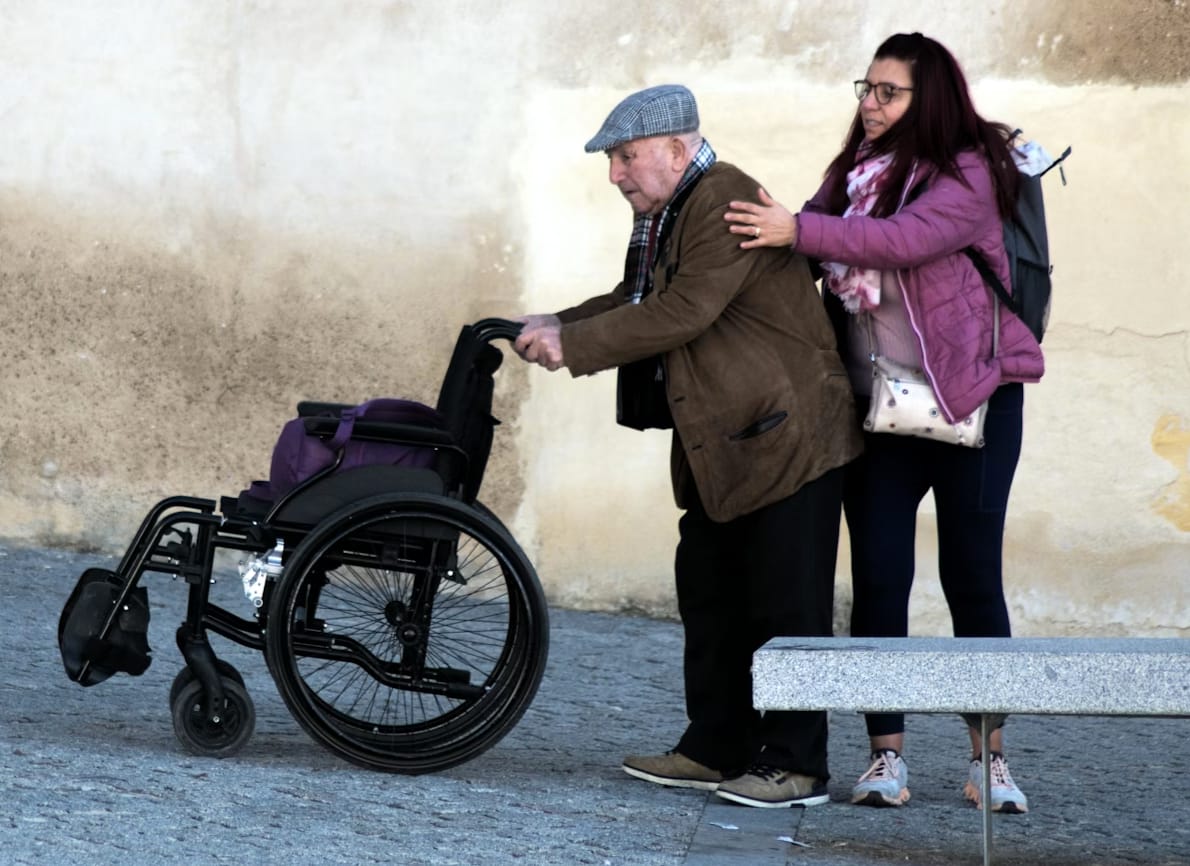
On the other end of the spectrum, there's caring for someone with cancer. The enemy feels more visible here, in some ways. There's a diagnosis, a treatment plan, and a team of specialists. And yet the uncertainty can be just as grinding.
The caregiver becomes something like an unpaid project manager, navigating a world of oncologists, chemotherapy schedules, and scan results, trying to keep track of everything while the hospital calendar dictates the shape of every week. You learn a whole new language fast, because you have to.
But what makes cancer caregiving so relentless is the constant oscillation between hope and dread. The "scanxiety" that rolls back around every few months like a wave you knew was coming but still can't quite brace for.
Good results bring relief, but never quite enough. And then the waiting starts again.
All the while, you're expected to show up physically — managing side effects, the fatigue, the days when treatment takes everything out of them. And at the same time, be the emotional anchor. Be steady. Be present. Be strong enough for two people, while quietly carrying your own fear somewhere it won't show.
Where do you put all of that? And who, at the end of a long hospital day, is asking how you're doing?
It's as though your own life has been put on hold. Making plans feels almost like a betrayal, a kind of denial of what's actually happening right now. And yet the life you had before can seem strangely distant too, like something you remember but can no longer quite reach.
Somewhere between what was and what might be, you just exist. And is that even allowed — to wonder about your own future, when theirs feels so uncertain?
What both paths share is the enormous pressure to be strong. An unwritten rule takes hold somewhere along the way: your feelings go on the back burner, because the patient has it worse. That's how the thinking goes.
But pain isn't a competition. And the prolonged stress of watching someone you love suffer, or slowly disappear, does real things to your nervous system. Chronically elevated cortisol levels can build toward what's sometimes called caregiver burnout — a state of complete emotional numbness where you're just moving through the days on autopilot, going through the motions without feeling much of anything at all. Your grief and your exhaustion are real. They exist independently of what the person you're caring for is going through. And they deserve to be acknowledged.
Recovery, for a caregiver, starts with recognizing that you can't do this alone. And that you were never supposed to.
For dementia caregivers, that might mean leaning on case managers or day programs — not as an admission of failure, but as a way to protect the time you do spend together so it can actually mean something. For cancer caregivers, it might mean handing off the groceries, the cleaning, the hospital runs to someone else, so you can just be there. Present. Not managing. Just there.
And the people around you have a role in this, too. Be the friend who doesn't ask how the patient is doing. Be the one who looks the caregiver in the eye and asks: "How are you doing today?" Not as a formality. As a real question, with space left over for an honest answer.
Because when was the last time someone actually asked?
Caring for someone with dementia or cancer is, when you strip everything else away, an act of profound and genuine love. It pushes people to the very edge of what they're capable of. And somewhere in that stretch between devotion and depletion, there's a balance to be found — between pouring yourself into someone else and making sure there's still something left of you.
You are not invisible in this. You are the quiet force holding everything together, the one without whom the whole thing simply stops. That matters. It matters enormously.
But even the quietest, steadiest forces need fuel. Need rest. Need someone to tend to them.
So who's taking care of you?
Knowing where your limit is can be the hardest part of all. As a caregiver, you gradually adapt to rising levels of stress, so by the time things are serious, they've already felt normal for a while. Your baseline quietly shifts, and you stop noticing.
The signals below act as your early warning system. If you recognize yourself in several of them, that's not a sign of weakness. It's your body telling you, urgently, that something is out of balance.
Warning Signs of Caregiver Overload
Physical signals:
Persistent fatigue. You wake up tired, even after a full night's sleep. The exhaustion doesn't lift, not even after an afternoon nap.
Physical complaints without an obvious cause. Frequent headaches, back or neck pain, stomach trouble, a recurring sense of dizziness.
Lowered immunity. You catch every cold and flu that comes your way, and it takes longer than usual to recover.
Sleep problems. Worries about care, medication, or the future keep you from falling asleep, or pull you awake too early.
Emotional and mental signals:
Short bursts of anger. You find yourself snapping more easily, sometimes at the very person you're caring for, and then feeling guilty about it afterward.
Feelings of hopelessness. The sense that the situation will never improve, or that you're permanently stuck in this role.
Trouble concentrating. You forget things often, can't follow a book or film, make small mistakes in your own admin that you wouldn't normally make.
Emotional flattening. Things you used to enjoy don't bring much pleasure anymore. Life starts to feel like one long, unending list of obligations.
Social and behavioral signs:
Withdrawal. You cancel plans more and more often, because it takes too much out of you, or because being around people who aren't living this doesn't feel worth the effort of explaining.
Neglecting your own health. Doctor and dentist appointments get quietly postponed. Meals become irregular. Exercise quietly disappears from your life.
Inability to let go. You've started to feel like you're the only one who can provide the care properly, and the idea of handing anything over to family, friends, or professionals fills you with doubt.
So what can you do? If you recognize yourself here, it's time to act.
Three concrete steps you can take today:
The GP check. Make an appointment for yourself and clearly state that you're a caregiver. Your doctor can assess your physical health and may refer you to a practice-based mental health worker for psychological support.
Open the conversation about care. Find a caregiver support point nearby. They can think through practical options with you — a volunteer to come in for an afternoon, or professional help around the house.
Schedule "no-care time". Block out at least two hours a week in your calendar where caregiving simply doesn't exist. No calls, no tasks, no thinking about it. Just you.
Noël
Created by © Noël