
The Amazon Mystery: The Tribe Where Dementia Almost Doesn’t Exist!
In a time when the Western world is struggling with a rapidly growing dementia epidemic, the statistics often paint a bleak picture. But deep in the Bolivian Amazon lies a cultural and biological exception: the Indigenous Tsimane people. Researchers have discovered a phenomenon among these hunter-gatherers and farmers that has captured the imagination of the medical community—a generation of older adults in whom dementia is almost nonexistent. This is more than just a rarity; it offers powerful evidence that our lifestyle and environment may play a much larger role in cognitive decline than we tend to assume.
The Tsimane live a way of life that most of the world left behind long ago. Their days are filled with physical activity—hunting, fishing, gathering food, and practicing simple agriculture. They have no modern infrastructure, no supermarkets, and almost no access to the ultra-processed foods that dominate our diets.
When researchers compared the cognitive health of people over 60 in this community with that of their counterparts in the United States, the results were astonishing:

The Tsimane not only show a much lower prevalence of cognitive decline than people in Western countries, but the few cases of MCI they do have appear to be linked more often to rare infectious diseases than to the typical neurodegenerative conditions such as Alzheimer’s disease.
The Amazon region seems to function as a powerful shield against the cognitive decline we often view as “inevitable.”
Why are the Tsimane so well protected?
The answer likely lies in a combination of factors that directly counteract the main risk factors for dementia:
1. Extremely High Physical Activity
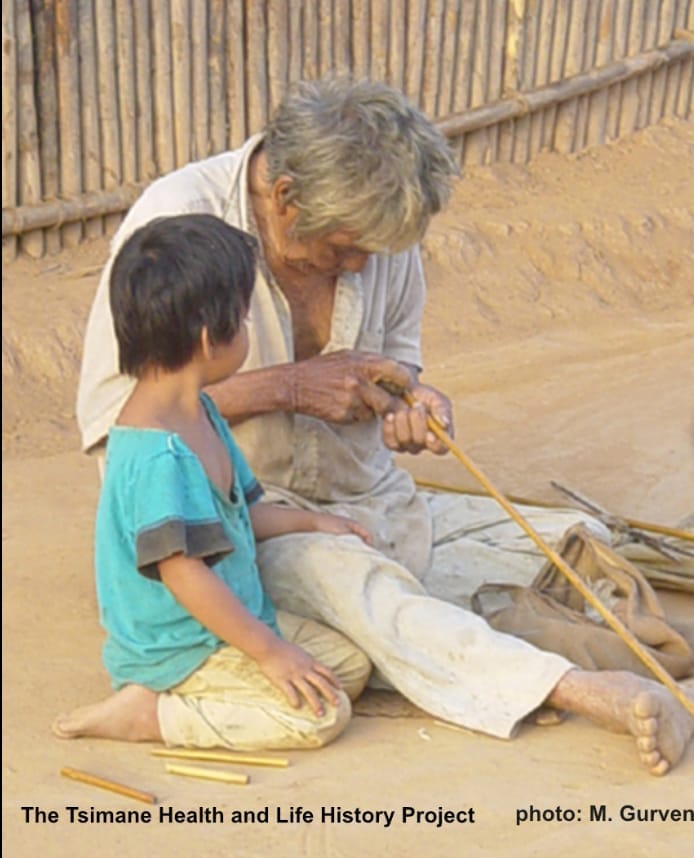
The Tsimane may be the most physically active people in the world. They spend hours each day hunting, gathering, and walking. Sitting still is rare for them. Scientific research has long shown that physical activity is essential for brain health. It improves blood flow to the brain, reduces inflammation, and stimulates the production of Brain-Derived Neurotrophic Factor (BDNF), a protein that supports the growth and survival of neurons. The Tsimane lifestyle provides constant, lifelong exposure to this protective effect.
2. The Unprocessed Diet
The Tsimane diet is rich in unprocessed carbohydrates such as rice, corn, and cassava, complemented by lean proteins from wild game and fish. Their diet contains almost no processed sugars or saturated fats—staples in much of the Western diet. This has a direct impact on their exceptional cardiovascular health. Previous studies have indicated that the Tsimane have the healthiest arteries in the world. Since vascular health is closely linked to brain health—especially because strokes and microbleeds in the brain are major risk factors for dementia—this cardiovascular fitness provides them with double protection.
3. Absence of Chronic Diseases
In Western societies, diabetes, obesity, and high blood pressure (hypertension) are major contributors to increased dementia risk. Among the Tsimane, however, these conditions are extremely rare. Without the chronic inflammation and vascular damage caused by these illnesses, their brains remain better protected against the harmful processes that lead to Alzheimer’s and vascular dementia.
The role of the Tsimane diet is crucial and is considered one of the most important factors behind their exceptional cardiovascular and cognitive health.
Annie

The most groundbreaking research, "Coronary atherosclerosis in the Tsimane: a living lifestyle experiment" (published in The Lancet in 2017), brought the Tsimane to international attention. This study showed that this Indigenous population has the lowest prevalence of coronary atherosclerosis (arterial plaque) in the world. More than 80% of their older adults (60+) are virtually free of risk for cardiovascular disease. The researchers attributed this to their exceptionally healthy cardiovascular profile, characterized by low blood pressure, low cholesterol, and low glucose levels—all direct results of their lifestyle.
These findings were later linked to cognitive health in the study "Extremely low prevalence of dementia in the Tsimane of the Bolivian Amazon" (published in 2023). This research, confirming the connection between heart and brain health, showed that the prevalence of dementia among Tsimane aged 60+ is almost zero (less than 1%), in stark contrast to the 10% or more typically seen in Western countries. The rare cases of mild cognitive impairment were more often associated with infections than with neurodegenerative diseases such as Alzheimer’s.
https://www.thelancet.com/journals/lancet/article/PIIS0140-6736(17)30075-8/fulltext
Two earlier studies provided insight into the factors enabling this health. The study "High total energy expenditure and physical activity of two subsistence-level South American populations" (2012) confirmed that the Tsimane are extremely active, taking more than 15,000 steps per day. This high level of physical activity and their low body fat drastically reduce the prevalence of chronic diseases
Created by © Noël