
7 Surprising Truths About Dementia Everyone Should Know
More Than Just Forgetting
A diagnosis of dementia often brings feelings of fear and uncertainty. For many, it is a terrifying prospect, inseparably linked to the loss of memories, identity, and the essence of who we are. We instinctively associate the condition with forgetting — with a slow fading of the self. While this fear is understandable, it paints an incomplete and often unnecessarily bleak picture of reality.
The truth about dementia is far more complex and, in some ways, more hopeful than commonly believed. It involves more than memory loss. It encompasses a wide range of symptoms, challenges, and even unexpected moments of connection and joy. This article, based on insights from leading health organizations and researchers, aims to reveal seven surprising or counterintuitive truths about dementia. By understanding these facts, we can replace fear with insight — and passivity with proactive, compassionate action.
1. It Doesn’t Always Start With Memory Loss
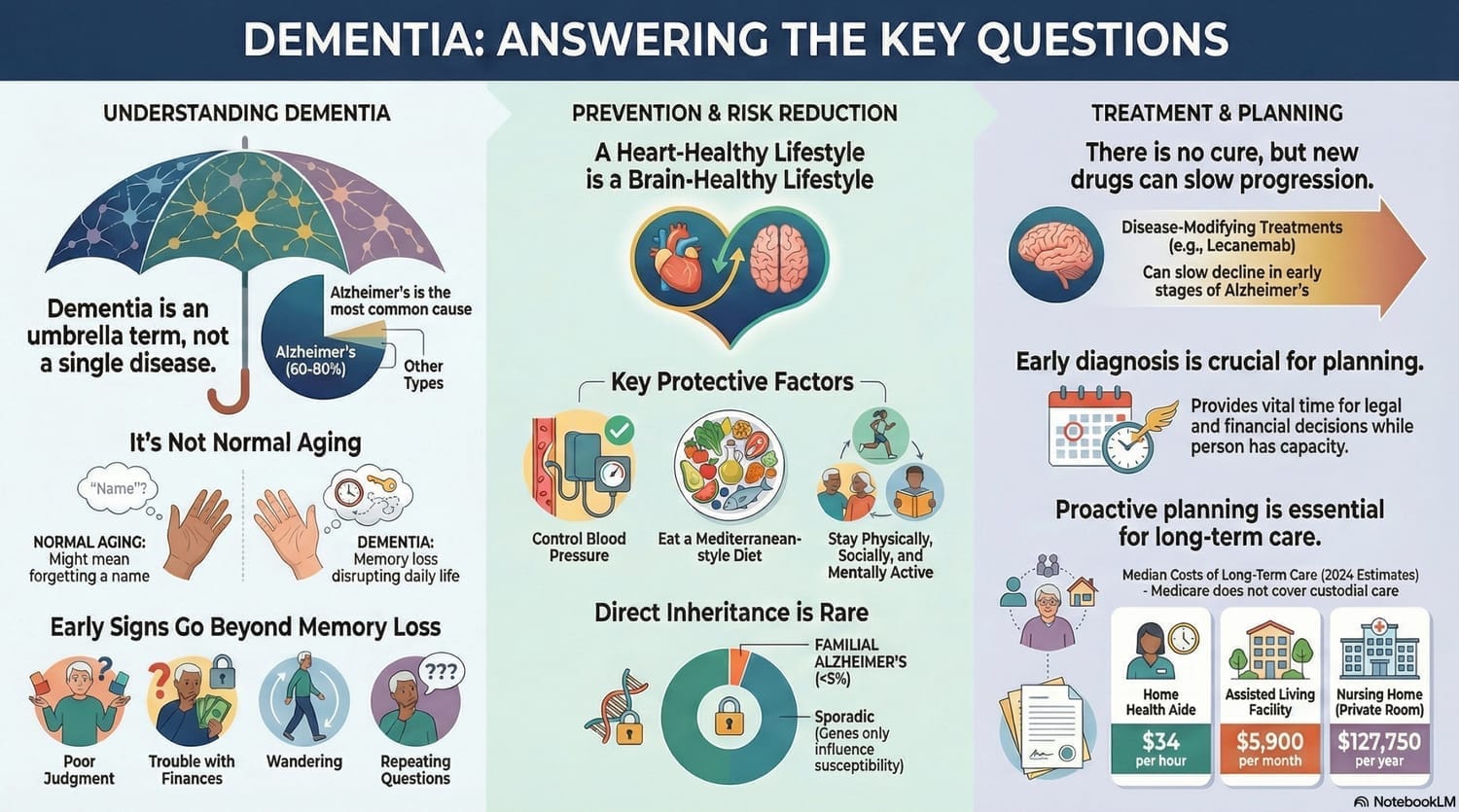
The classic image of dementia is someone constantly misplacing their keys or forgetting the names of loved ones. But the reality is that memory loss is not always the first symptom. According to the Alzheimer’s Foundation of America, unexplained changes in mood, behavior, or abilities can be early warning signs of the disease.
For example, someone may suddenly become unusually anxious, suspicious, or irritable. Or a normally social person may abruptly lose interest in hobbies and social activities. This sharply contrasts with the widespread myth that faltering memories are the primary starting point.
This insight is crucial. Families who recognize these other changes as potential warning signs — rather than dismissing them as personality quirks or a “bad phase” — can seek medical support sooner. An early diagnosis opens the door to treatments that may slow the progression and gives families time to make important plans for the future.
2. A Life With Dementia Is Still a Rich Life
One of the most harmful misconceptions is that a dementia diagnosis marks the end of a meaningful life. In reality, people with dementia can absolutely continue to enjoy activities, learn new routines, and share moments of deep joy, love, and connection with those around them.
The focus shifts from what has been lost to what is still possible. People in the early to middle stages of the condition can remain active, adapt to new circumstances, and maintain a good quality of life. The ability to give and receive love remains intact throughout all stages of the disease. Breaking the stigma is invaluable — as Gary, who lives with the condition himself, expressed so powerfully:
"I heard someone whisper the other day, ‘My father has Alzheimer’s.’ I just gave him a big hug and said, ‘You don’t have to whisper — shout it out loud.’ I’m not ashamed that I have Alzheimer’s. All my neighbors know I have a problem, and there’s no ridicule, no stigma...”
This perspective changes everything. It helps us focus on appreciating the abilities that remain, and on the unbreakable human capacity for connection — a capacity that persists even through the most challenging phases of dementia.
3. What Patients Want From Treatment Is Not What You Think
In the scientific world, treatment for Alzheimer’s disease often focuses on targeting biological features in the brain, such as removing amyloid plaques and tau protein tangles*.
It is therefore surprising to discover that the priorities of people with dementia — and their care partners — are often very different.
Research shows that the most important outcomes for them, in order of priority, are:
* Improving or restoring memory.
* Stopping the progression of the disease.
* Slowing the progression of the disease.
* Improving daily functioning.
* Being able to remember family members.
* Remaining independent and not being a burden to others.
* Removing plaques and tangles.
The most striking conclusion is that “removing plaques and tangles, a major biological hallmark of Alzheimer’s disease, is one of the least important outcomes for patients and care partners.”
This insight is invaluable. It challenges the purely biological view of treatment success and emphasizes that we must focus on outcomes that directly affect a person’s quality of life and autonomy.
A treatment is only truly “meaningful” if it makes a noticeable difference in the patient’s daily functioning and well-being.
4. Genetics Are Rarely a Death Sentence
One of the greatest fears for people who have a parent or family member with dementia is the question: “Will I get it too?”
The fear of a genetically predetermined fate can be a heavy burden. Fortunately, in most cases, this fear is unfounded.
Statistics from the Alzheimer Society of Canada and other studies paint a clear picture: familial Alzheimer’s, in which the condition is directly inherited through a specific gene, accounts for less than 5% of all cases.
For the vast majority of people (more than 95%) with dementia, genes only influence susceptibility to the condition — they do not determine it.
In other words, having a certain gene may increase risk, but environmental and lifestyle factors are often just as important, if not more important, in activating the disease.
This is an incredibly important and reassuring fact.
It means that a family history of dementia is not a death sentence, but rather an additional reason to proactively invest in a healthy lifestyle.
5. Your Most Powerful Weapon Against Dementia Is a Healthy Heart
Although no guaranteed method exists to prevent dementia, there is overwhelming evidence that a healthy lifestyle can significantly reduce the risk. The most concrete and scientifically supported strategy centers on one core principle, emphasized by organizations such as the Mayo Clinic and Alzheimer’s Disease International:
what’s good for your heart is good for your brain.
The connection between cardiovascular health and brain health is undeniable. The brain depends on a constant, rich supply of oxygenated blood through an intricate network of blood vessels. When this system becomes damaged, brain cells suffer as a result.
The key strategies for lowering your risk are therefore aimed at protecting your heart and blood vessels:
• Manage vascular risk factors: keep your blood pressure and blood sugar (diabetes) under control.
• Eat a balanced diet: the Mediterranean diet — rich in vegetables, fruits, whole grains, fish, and olive oil — is especially effective.
In addition, risk is further reduced by quitting smoking, staying socially and mentally active, protecting your head from injury, and treating hearing loss early.
While we cannot eliminate the disease entirely, these action-oriented steps give us powerful tools to significantly reduce the likelihood of developing dementia.
6. Repeated Questions Are Not a Memory Test, but a Search for Comfort
For caregivers, the endless repetition of the same question can be one of the most frustrating and exhausting parts of the caregiving experience.
“What time is it?”
“When is John coming home?”
“What are we having for dinner?”
Questions like these — sometimes asked again only minutes after the previous answer — can feel like a test of patience.
More profound insight, however, reveals another reality. According to care experts, this behavior is often caused less by an inability to retain information and more by an underlying emotional need.
The repeated question is not a search for facts, but a search for reassurance, certainty, and emotional connection in a world that is becoming increasingly confusing.
The person may be feeling anxious, unsafe, or disoriented.
The key advice, therefore, is not to respond with logic (“I just told you that!”), but with empathy.
Focus on validating the underlying emotion. Instead of simply repeating the answer, offer reassurance.
A helpful technique is gentle redirection: guide the person’s attention toward something else, such as looking at family photos together.
This perspective can transform a stressful interaction into an opportunity for connection and compassion.
7. Overall Cost and Expenditures
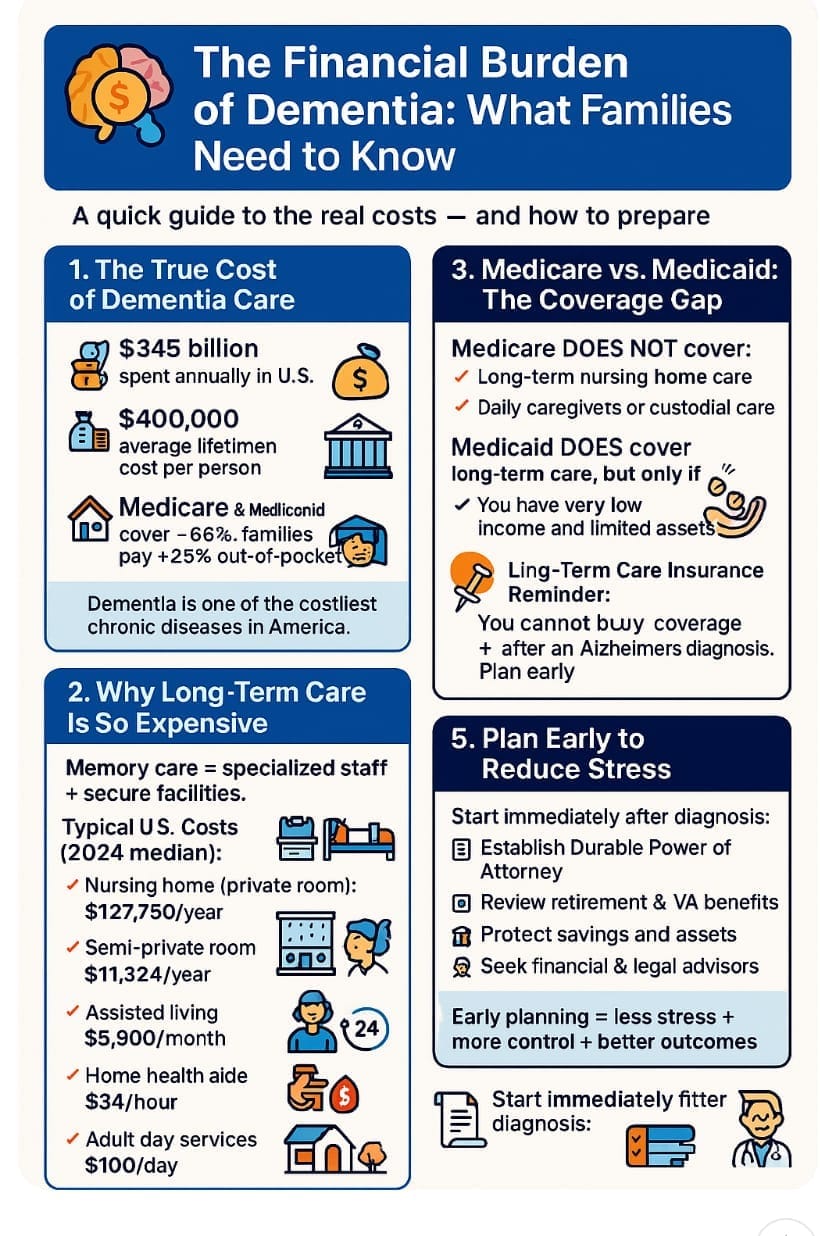
Dementia care represents a massive financial outlay; United States as an example:
Total Formal Care Spending: Approximately $345 billion is spent on formal care for people with dementia.
Lifetime Cost: The average lifetime cost per person for memory care is estimated at $400,000.
Funding Split: Public programs (Medicare and Medicaid) cover two-thirds of the formal care cost, leaving about 25% to be paid out-of-pocket by patients and families.
High Cost of Long-Term Care Services
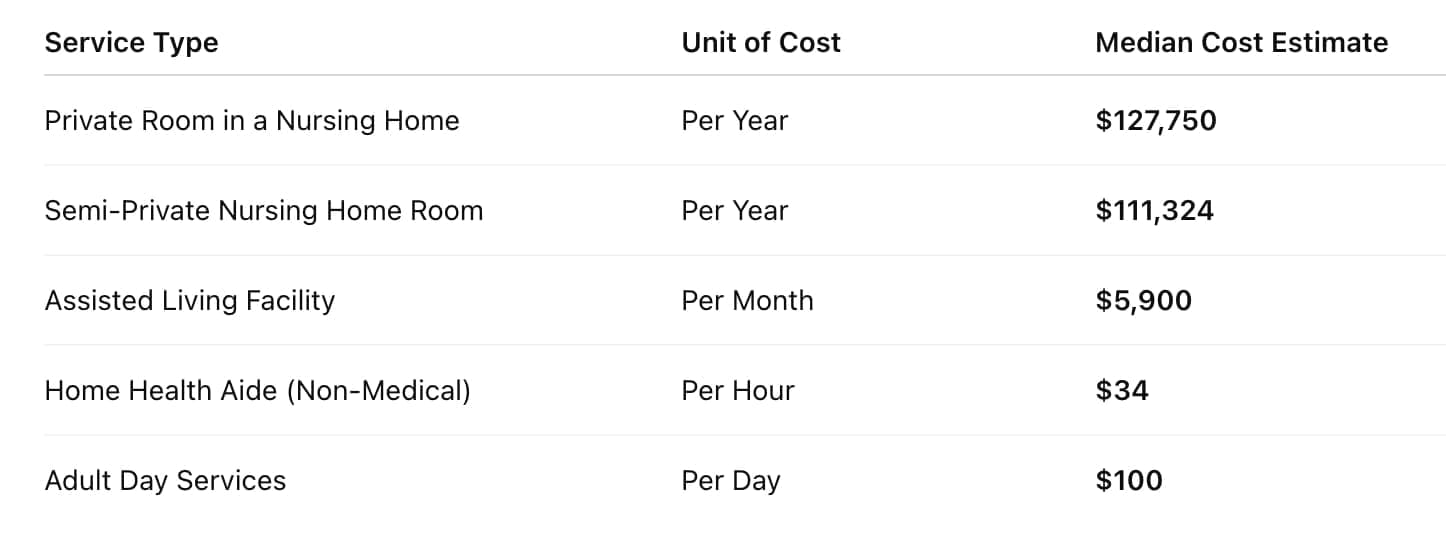
Costs are high due to the progressive nature of the disease and the need for specialized custodial support. Memory care is typically 20%–30% more expensive than general assisted living.
Median national costs for long-term care (2024 estimates):
From Fear to Insight
Dementia is and remains a drastic condition, but a deeper and more nuanced understanding can replace paralyzing fear with a sense of control and empowerment. As we have seen, the reality of the illness is often different from the persistent myths that surround it. It doesn't always start with forgetting, a diagnosis does not mean the end of a meaningful life, and heredity is rarely an inescapable destiny.
These truths offer concrete tools. They help patients, families, and society approach the illness with more compassion, realism, and proactive strategies. They shift the focus from passive observation to active planning, from loss to maintaining connection.
Now that we know these realities, how can we change the conversation about dementia from a narrative of loss to a narrative of dignity, preparation, and maintaining connection?
Noël
What Are Amyloid Plaques?
The brain is constantly producing and breaking down proteins.
Amyloid-beta is one such protein fragment that is normally cleared away properly.
With amyloid plaques, things go wrong: the protein begins to clump together outside brain cells.
Why is this a problem?
These plaques disrupt communication between brain cells.
They can trigger inflammatory reactions.
They are commonly found in Alzheimer’s disease and are considered one of its defining features.
What Are Tau Tangles?
Inside brain cells are microtubules — tiny tubes that help with structure and transport.
Tau proteins keep these tubes stable.
What happens in a tau tangle?
Tau proteins change shape due to chemical changes (such as excessive phosphorylation).
They detach from the microtubules and clump together inside the cell.
The cell becomes unstable and may eventually die.
How Do Plaques and Tangles Work Together?
Both disrupt brain cell function, but in different locations:
Plaques → outside the cell
Tangles → inside the cell
Together, they strongly contribute to memory loss and other symptoms of Alzheimer’s.
The Brain as a City
Amyloid Plaques = Garbage Piling Up on the Streets
Imagine a city where daily garbage collection normally keeps things clean.
But with amyloid plaques, the trash doesn’t get picked up — it starts piling up.
What happens then?
Streets get clogged.
Cars (brain signals) can no longer travel smoothly.
The entire city becomes disorganized.
Tau Tangles = Broken Rails Inside the Tram System
In the same city, trams run on rails that form an internal transport system.
Tau proteins are like the bolts and screws that keep the rails stable.
What goes wrong?
The bolts loosen and clump into tangles.
The rails twist and collapse.
Trams (nutrients inside the brain cell) can no longer run.
Buildings along the rail line (brain cells) become damaged and die.
Together, They Create Chaos in the City (the Brain)
Outside, garbage piles up (amyloid).
Inside, the rails collapse (tau).
As a result, essential city services stop working →
➡️ memory loss
➡️ confusion
➡️ problems with thinking

Created by © Noël