
🌿 Dirty Dozen & Clean Fifteen 2025: What They Mean for Your Health
Anyone who cares about healthy eating and conscious food choices has probably heard of the terms Dirty Dozen and Clean Fifteen. These annual lists, compiled by the Environmental Working Group (EWG) in the United States, provide insight into pesticide contamination levels on fruits and vegetables.
In 2025, the results are once again surprising—and concerning. Not only is an expanded ranking available, but new data reveal that certain foods contain far more pesticides than previously assumed. In this article, we take a deep dive into the latest findings, how these data are collected, and what they mean for your daily food choices.
🧪 How Does the EWG Measure Pesticides? – Methodology Explained
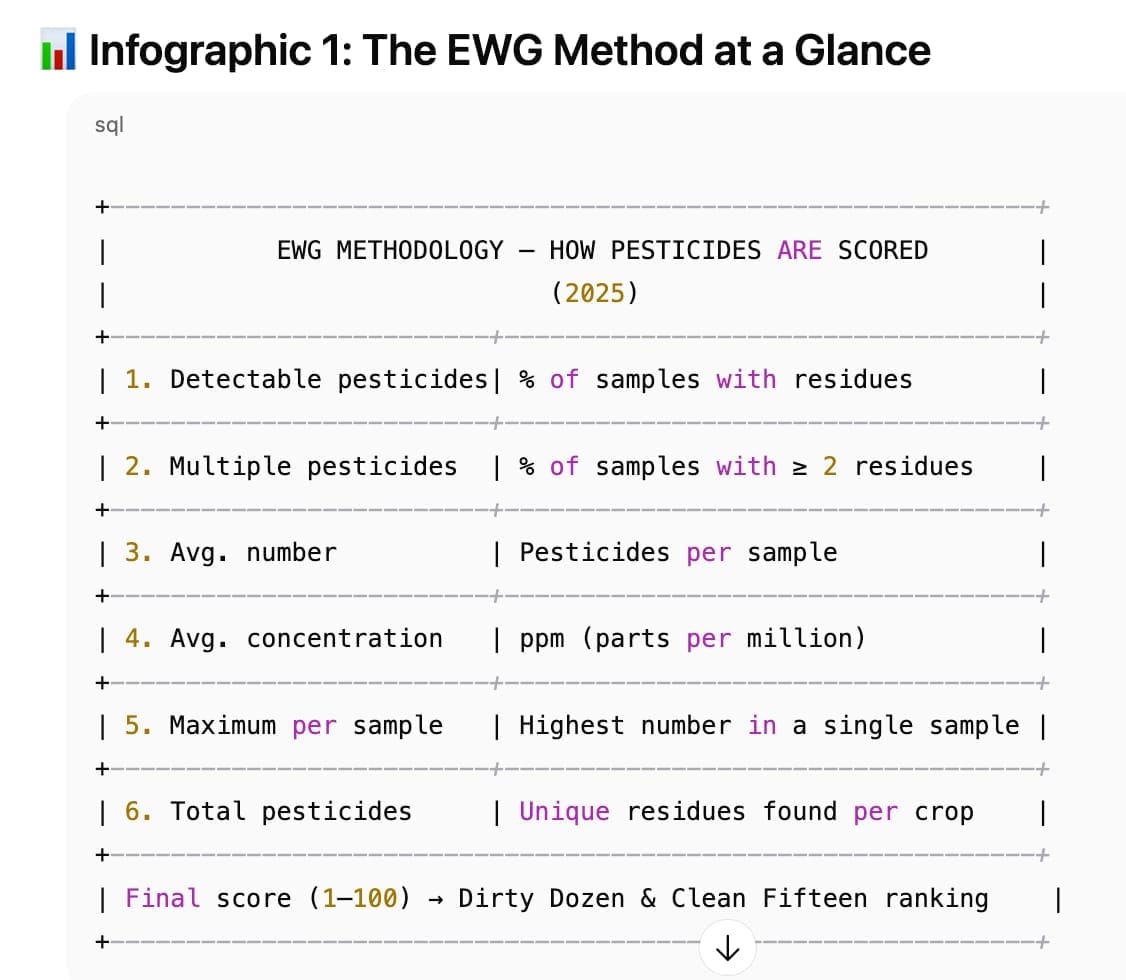
The EWG evaluates pesticide contamination using test data from the USDA and FDA. To compare foods fairly, the EWG normalizes all results on a 1–100 scale, with 100 representing the highest level of contamination.
Each food is ranked based on six measurements:
* Percentage of samples with detectable pesticides
* Percentage of samples with two or more pesticides
* Average number of pesticides per sample
* Average pesticide concentration (ppm – parts per million)
* Maximum number of pesticides found on a single sample
* Total number of different pesticides found on that crop
These indicators are combined into a single score. The higher the score, the “dirtier” the product.
The 2025 rankings are based on 46,075 samples, taken from the most recent USDA and FDA testing cycles.
🍓 Dirty Dozen 2025 – The 12 Most Contaminated Foods
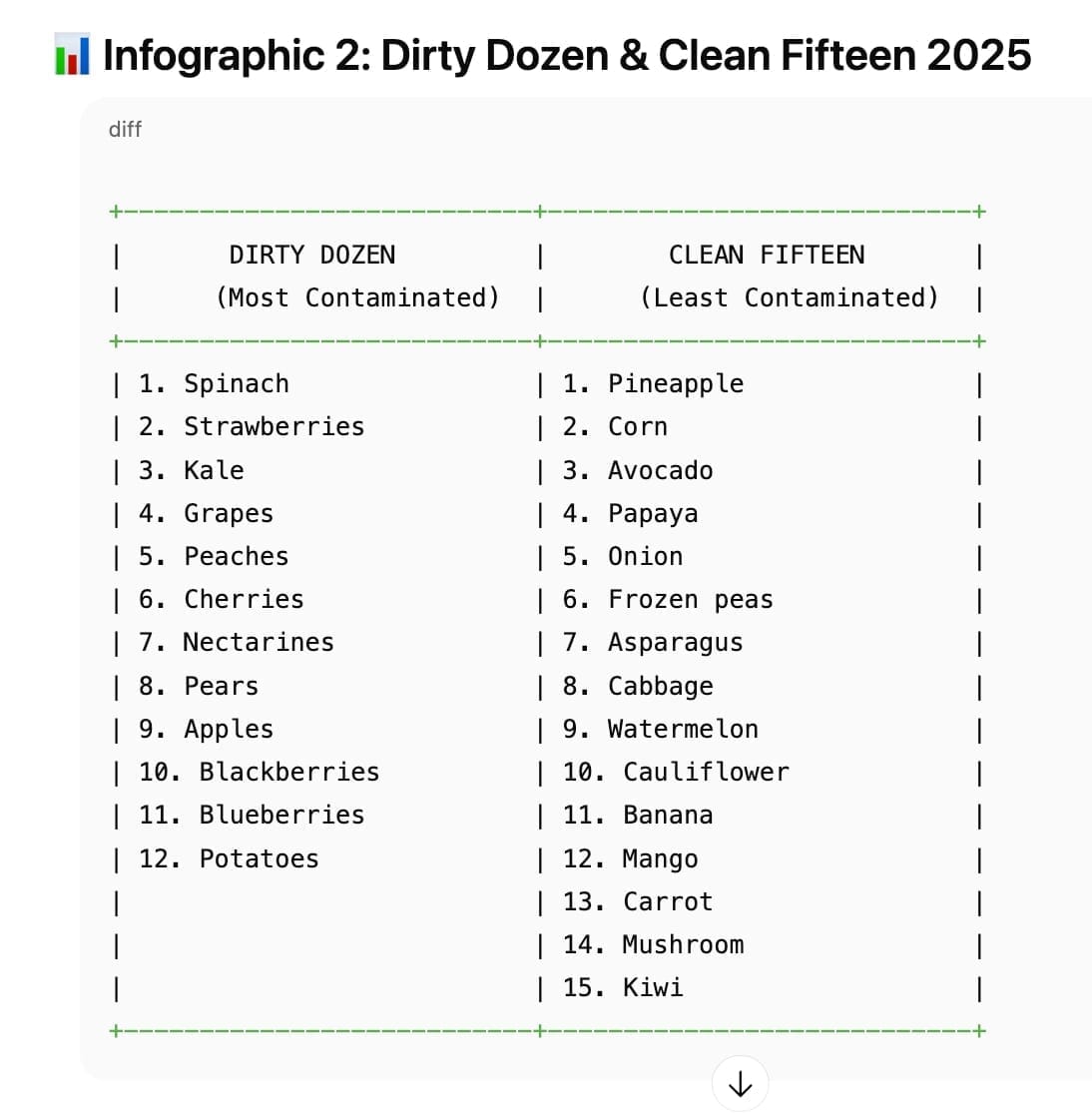
Based on the 2025 total scores, the following foods contain the highest pesticide levels:
Dirty Dozen 2025
Spinach
Strawberries
Kale and leafy greens
Grapes
Peaches
Cherries
Nectarines
Pears
Apples
Blackberries
Blueberries
Potatoes
These foods often contain multiple pesticide residues—even after thorough washing and peeling. Many are everyday staples, making the list especially relevant for consumers who want to reduce exposure.
🍇 Raisins: The True #1 (But Not Included in the Official List)
For the first time in nearly 20 years, the USDA tested raisins again. The results were alarming:
99% of conventional raisin samples contained two or more pesticides
an average of 13 pesticides per sample
one sample contained 26 different pesticides
Because raisins are a processed food (dried grapes), they are not included in the official Dirty Dozen.
But the EWG’s re-analysis shows:
➡️ If raisins were included, they would rank #1.
➡️ Even some organic raisins were contaminated.
This is noteworthy, as raisins are often considered a healthy snack for children.
🍈 Clean Fifteen 2025 – The 15 Cleanest Foods
These fruits and vegetables contain minimal pesticide residues and are generally safe to buy conventionally grown.
Clean Fifteen 2025
(These are the lowest-ranked foods in contamination)
Pineapple
Corn
Avocado
Papaya
Onion
Frozen peas
Asparagus
Cabbage
Watermelon
Cauliflower
Banana
Mango
Carrot
Mushroom
Kiwi
These crops typically have thick skins, natural pest resistance, or require less pesticide use.
🌍 How Relevant Are These Lists for Europe?
Although regulations differ between the U.S. and Europe, research shows:
global food supply chains overlap heavily
fruits like kiwi, grapes, and berries often come from the same exporting countries
pesticide practices are more similar worldwide than many assume
European monitoring still finds multiple residues on many products. Residues below legal limits do not account for the cocktail effect—the combined impact of multiple chemicals.
⚠️ The Cocktail Effect: Why Multiple Pesticides Matter
EFSA data show:
33% of European produce contains more than one pesticide
for summer fruit, that number exceeds 65%
This is important because chemicals can interact, amplifying health risks—yet long-term research on these interactions is still limited.
🧬 What Does Science Say?
✔ Organic foods reduce pesticide exposure
Clinical studies show that switching to organic food leads to:
rapid decreases in pesticide levels in urine (within days to weeks)
significantly lower overall exposure
✔ Observational studies link organic food to:
improved fertility
lower risk of non-Hodgkin lymphoma
lower BMI
lower risk of type 2 diabetes
✔ Children are more vulnerable
The American Academy of Pediatrics warns of:
childhood cancers
behavioral issues
reduced cognitive performance
Pediatricians are encouraged to advise parents to consult the EWG lists.
🌿 How You Can Use This Information
✔ Buy the Dirty Dozen organic
If you need to prioritize, focus on the top 12.
✔ Feel safe buying the Clean Fifteen conventionally
They pose minimal contamination risks.
✔ Be cautious with raisins
Choose organic and check sourcing when possible.
✔ Wash produce thoroughly
This won’t eliminate all pesticides, but it reduces part of the residue.
✔ Continue eating plenty of fruits and vegetables
Even conventionally grown produce is healthier than eating too little of it.
🏁 Conclusion: Eat Mindfully, Eat Well
The Dirty Dozen and Clean Fifteen help you make smarter choices. By being aware of pesticide levels, you can:
reduce your exposure
support your health
make more sustainable decisions
But most importantly:
Fruits and vegetables remain essential for your well-being—knowledge simply helps you choose even better.
Annie

Created by © Noël